
“When I became a father, I began to worry not only that I would die and not be able to care for my daughter but that I would die in an embarrassing way.” New fiction by Ben Lerner.
This must be why, ever since Mr. Kessler taught us the steps for “assisting a conscious choking adult” in our eighth-grade health class, and made us rehearse them with one another—without actually performing the “thrusts,” which he explained were quite dangerous, leaving us with the sense that we should never actually do what he was supposedly preparing us to do, unless we were trying to inflict harm on an enemy , so that the entire scene became a fraught and confusing mashup of sex and violence and humiliation that had nothing to do with saving anybody—I have always thought there was sadism haunting the question “Are you choking?,” since the one who still draws breath and can form it into speech demands from the person who is choking a response they cannot give.
In my mind it also perversely links the emergency protocols for choking with breath play, in which—aside from whatever the physiology of asphyxiation and orgasm might be—there is the erotic drama of being reduced to mere body and then restored to speech. Regardless, choking is a uniquely human drama, a definitional drama for the, a drama at the heart of the human, or, rather, at the larynx, the voice box, which, as we evolved, moved lower and lower, enabling us to generate a long column of vibrating air we can shape into meaning with our mouthparts, shaped air that might in turn build and shape a world, but this evolutionary “speech advantage” required that the space in our bodies for breathing and swallowing be shared; the formal capacity for speech comes with the risk of choking to death, something only humans frequently do. Choking and scenes of instruction had always been linked in my mind, not only because of Sackett and Kessler but also because I associated the ritual posing of a question that can’t be answered, the addressing of speech to the helpless nonspeaker, with the relation between infant and parent, the parent who talks to the baby as if she might respond, the very first language lessons, often starting in utero: Hello, little Astra, can you hear me? She wasn’t yet named Astra when we attended—a little more than three years before I choked on my steak—the “infant-CPR-and-safety class” Inma’s ob-gyn recommended for all new parents. We found ourselves one February night around a table at N.Y.U. Langone with three other couples and one unaccompanied pregnant woman while the instructor, a nurse in light-blue scrubs, circled us with a cart on which were stacked infant CPR manikins, asking each couple to take one. Some of the manikins were brown and some of them were white, and I assumed that the nurse, a white woman, was asking couples to choose their manikin instead of simply distributing them, so that people could select the one whose skin color they believed most closely approximated their future offspring’s, although nothing about the plastic tonalities looked human. The man and woman who formed the first couple the cart reached were Black; they selected a brown manikin; the next couple consisted of two white women, and they selected a white “baby”; when it was our turn to choose from the nightmarish cart, I leaned back a little to make it clear to Inma that she should decide. She hesitated, and I assumed she was imagining the future pigmentation of our daughter—would she more closely resemble Inma’s coloration or mine, and was Inma’s skin color ultimately closer to the brown plastic or the white? It was as if all the future complexity of our interracial family were enfolded in the selection of the dummy, although this might have been only in my mind. Inma chose a brown one. The woman without a partner—I thought she was white, but I wasn’t sure—chose a brown baby, too, and set it down harder than she meant to; the plastic head hit the table with a crack. Once we all had our babies, the nurse sat and began to read from a binder; we were to be congratulated for taking the time to acquire these lifesaving techniques. I’d already decided I’d be unable to assimilate any of the information in real time and would have to catch up later with YouTube tutorials, and, as I expected, everything unfolded for me, once the actual practicing started, in a disordered, disorienting whirl: Lay the infant face down across the arm , deliver five sharp blows with your palm between the shoulder blades. But how hard? someone asked. Harder than you’d think, the nurse said. Turn your infant over, place two fingers in the center of the doll’s chest, quickly compress to at least a third of its depth, approximately an inch and a half. But how fast? someone asked. A rate of around a hundred times a minute, she said; think of the song “Stayin’ Alive.” I thought the nurse had made a tasteless joke, but she was serious, repeating: “Think of the tempo of ‘Stayin’ Alive,’ ” which I would later learn is known as the CPR anthem. I wasn’t sure I knew how to “think of a tempo,” if I could be confident I hadn’t sped it up or slowed it down, but now the song became a mocking soundtrack in my mind: Tilt the baby’s head back to open the airway, cover both the child’s mouth and nose with your own mouth, and whisper “Stayin’ Alive’’ directly into the infant’s brain, inspirit the dummy, its windpipe, then beseech it to stay: Do not leave me; if you do, I’ll jump off the Manhattan Bridge, I have a place in mind. The manikin tasted like rubbing alcohol, I remember pushing it over to Inma, as if it were a strangely shaped bong from which I’d just taken a dizzying hit, but Inma pushed it back. Deliver two breaths, the nurse was saying. Each ventilation should last a second. I looked at the couple across the table; they were doing back blows again, so I started doing back blows. The nurse was saying something about the compression-to-ventilation ratio when the woman who didn’t have a partner slammed her hands on the table and said, “I killed my baby. My fucking baby is dead, O.K.? I’m the worst. I am the worst mother who ever lived.” In the ensuing silence, I tried to identify her accent. Greek? Israeli? Everyone was staring at the woman or trying not to , or everyone was staring or trying not to stare at the plastic baby she had failed . For a long moment nobody knew what to do. Then Inma and one of the other women pushed back their chairs and went to her as quickly as their pregnant bellies would allow, offering comfort, support, encouragement. I will never forget that moment of transformation when the sanitized and anxious space of the conference room suddenly became human, how we all scooted our chairs a little closer to the woman, how we all started laughing and joking and talking about how scary and weird this parenting thing was, would be, how the couple forms dissolved into something larger, however briefly, even the nurse joining us, becoming one of us, showing us pictures of her kids on her phone—“This is the troublemaker,” “Here’s one from Halloween”—before we all returned to our places around the table and the class resumed, infinitely more collaborative now, although I still couldn’t keep the emergency protocols straight, couldn’t learn anything, except the necessity of repeatedly sweeping your home for choking hazards, as we discussed during the review period, when we’d set our dolls aside. Beware of marbles and Legos your older kids might have left around, beware of screws or washers that might have fallen from your ready-to-assemble furniture, a cashew or a piece of gum a grownup might inadvertently have let fall to the carpet where your child will crawl, and—perhaps most important—you must always remember to properly cut your child’s food, to cut round foods like hot dogs and grapesthe nurse took turns looking us in the eye: “You don’t know how many lives would be saved if parents would cut their kids’ hot dogsinto strips, then cut them again,” and so, in addition to our joke, and the memory of the camaraderie the worst mother enabled, that was what I retained from our child-safety-and-CPR class, that was what I took home, that was what I recalled a year and a half later when Astra began to eat solid food, when we were no longer puréeing what we fed her and / or mixing it with breast milk, and when she would sit in her high chair banging her sippy cup on the tray demanding,, her favorite food and, according to Inma, her first word, although I think Astra was attempting her mother’s name. When I was a child, somebody gave me a paperweight that contained within it an impossibly detailed forest scene, and when I think of the grapes, of how all the complexity of our family became enfolded in the grapes, I imagine that if I had lifted one of those grapes up to the light and rotated it around I would have perceived within it all of our family histories depicted in miniature, not just me and Inma in our own high chairs at the dawn of the eighties, our parents feeding us, but our own parents being fed in the forties and fifties, all the way back to our respective Old Worlds, Kyiv and San Juan, kasha or plantains, however mouths were sated and policed according to family and cultural custom, and if I kept rotating the grape I’d also see Mrs. Sackett wielding her pencil of life and Mr. Kessler telling us not to practice our thrusts, all of it as intricately rendered as the shield of Achilles, or Zeuxis’ grapes, which were so perfectly represented in his paintings that birds tried to eat them, birds, which sing from their syrinx, not their larynx, and cannot to my knowledge choke to death, although some can mimic human speech. When I was in charge of preparing Astra’s food, I chopped everything so finely I admit I might as well have blended it or hit it with a hammer, which is not what I was supposed to be doing, I was supposed to be giving her an experience of texture, as Inma kept pointing out—“She has to learn what she likes; she has to learn to use her teeth”—and since Inma’s mother was over many times a week she often witnessed Inma remarking that I’d inadvertently liquefied Astra’s food, and of course Inma’s mom silently sided with Inma, forming a triangle; I was the neurotic cracker with no experience caring for children who was trying to micromanage the steamed carrots, the hot dogs , and the grapes. Because Inma’s mom had taught kindergarten , I’d hoped she might share the intensity of my concern about Astra choking—surely there had been trainings about these things—but although both Inma and her mother were incredibly conscientious caretakers in general, so graceful and competent with Astra that I felt bumbling in comparison, and although they watched her closely when she ate, the fear of her choking quickly became my thing, the worry I carried that carried all of my other worries: I would pulverize the food and they would not quite slice it properly, which is the way of polarization. When Inma’s mom was sitting with Astra at the table, it was less that I watched over them than that my effort not to was palpable, and if Inma or her mom was cutting something for Astra I perceived a slight exaggeration in their gestures, a trace of performativity that said, See how tiny these pieces are? Do we have your permission to feed her? It was a cliché, this tension around the child’s eating, the triangulation, etc., but I was finding small, mortally uncut grapes in the purple plastic snack container Inma’s mom took with Astra to the park, and large grapes on the high chair that were cut in half but never lengthwise , and then I’d confront Inma about it, as if it were her fault, demanding she talk to her mom, and before we knew it we would be having a spectacular fight, scaling up from the grapes to questions of power, labor, value, the possibility of love, Astra crying when we yelled . We’d had one such fight only a month or two before I choked. And it was only when I choked, while I was standing there choking at Café Loup, that I fully realized that our polarization around the grapes issued from our conflicting but, in fact, equally magical beliefs about the effects of my voicing, again and again, my fear of Astra choking. Inma would of course agree that the food should be cut up, but the intensity of my focus on this particular risk, the repetitive articulation of my concerns—reading statistics off my phone , showing with my thumb and index finger the tiny diameter of a child’s windpipe—was, in Inma’s mind, courting disaster. This was both because talking about it at all invited the evil in and because too much confidence in “risk management,” the financialized world view of the privileged, was a kind of hubris, the fantasy that you could halve or quarter the constant threats that attended living; it was asking God, or whatever cosmic force, to cut you lengthwise down to size. Inma, then, did not speak her fears, for fear that speaking them would make them happen ; she did not, while pregnant with Astra, ever acknowledge her terror of another late miscarriage, for instance, neither to me nor, I’m sure, to her mother, whereas I told my own mother constantly that the pregnancy wouldn’t make it to term, that we were never going to have a child—not because I believed these things with certainty, and not only because I was expressing what Freudians call “signal anxiety” about a prospective trauma, but because I thought, although I would have denied it, that voicing the worst-case scenarios made them at least a little less likely, a kind of negative prayer. If I survive, I thought as I stood in Café Loup, although not in these words, not in words at all, so “thought” isn’t really right—I simply felt, as I stood dying, that if I “lived to tell the tale” of my choking I would not tell it, couldn’t tell it, because Inma would believe, or at least half believe, that I was responsible for what had happened , that the steak was my comeuppance for all the worry I’d expressed. That was crazy, and yet it struck me as equally or perhaps even more crazy to think that my choking was entirely random, entirely unrelated to my obsessive worry about Astra’s choking and the tension surrounding it. If I didn’t accept the idea of mere coincidence, contingency, and I didn’t accept that the universe was punishing me, what did I believe? I rejected what I thought of as Inma’s Caribbean metaphysics, and yet my substitute religion, the “Jewish Science” of psychoanalysis, would suggest that I’d been unconsciously driven to choke, because I felt unheard about choking, driven to destroy myself over the grapes. And this would really mean that I was responsible for what had happened, that I had quite literally done it to myself, however unconsciously. Chance, fate, the version of fate the unconscious was—I couldn’t accept any of these world views; I had no world view, I’d had forty years to develop one and failed. Again, these were less coherent ideas than waves of feeling issuing from an increasingly unoxygenated brain, but now, out of this metaphysical abyss, I was commanded—just as I’d been commanded at one point to flee the restaurant and destroy myself—never to tell the story of my choking. It felt as if some god or Kafkan father or wrestling coach were making me an offer: If you swear you will not recount your choking, will not turn it into a story, I will allow you to survive, I will break the seal, all of this will have been a warning to shut your mouth, you fucking slob, to stop tempting fate, to learn to withhold, to hold in the sense Inma often ascribed to that term—as when she asked me to “hold” her upset without trying to fix it or explain it or interpret it, or when she wanted me to “hold” more of my anxiety without spreading it around in a plume of speech. And what was my problem, exactly—why couldn’t I hold a feeling without having to express it, why couldn’t I stand to have a thought inside me without having to immediately spit it out, disgorge it, clear the passage? Early in my career as a choker, I believed I would narrate my way back to the world of the breathing, that language would save me, but now I swore, desperately: Yes, if I am allowed to live, I will tell no one what has happened to me, and, starting with that silence, I will learn the way of silence, I will no longer manically ingest and express, will neither tempt fate nor attempt to evade it with talk. Please. Aaron was behind me, his breath on my neck, trying to figure out where to put his hands. Instead of my life “flashing before my eyes,” a series of odors were doing whatever the olfactory equivalent of flashing is, all of them intensified by the fact that I couldn’t inhale. Childhood cut grass , the sulfur of strike-anywhere matches, asphalt after rain, fresh paint in a room whose windows are open in the spring, movie-theatre popcorn, the sexual smell of a woman who broke my heart in my late twenties, hyacinth, watermelon candy , my first cat , grilled peaches at my brother’s in Seattle—then, as Aaron placed his interlocking hands above my navel, they all started to coalesce around Astra, the odors, the slight soapy smell of Inma’s breast milk, of the milk on Astra’s infant breath, the milky smell of Astra’s shit before she started eating solid foods, the smell of her vomit on the flight back from Ponce, the smell of the baby shampoo on the wisps of her hair mixing with the cherry blossoms when I walked her through the botanical gardens in the carrier, it was all Astra now, as Aaron performed his first ineffectual thrust, tears finally in my eyes, haloing all the tabletop candles, my little aleph, little star, my asterisk, and even as my peripheral vision began to contract and my ears started to ring and I was begging my daughter to forgive me in my mind, I was surprised—and surprised that I was surprised, that in my last moments on earth, as I was flooded with terror and love, I had the mental space to note how the world failed to conform to my expectations of it—that nobody around us in the restaurant seemed aware of what was happening, how was it possible that no waiter had appeared, that people around us were still drinking and laughing and eating and generating columns of vibrating air at their tables while Aaron did it again, how was it possible nobody was answering the phone, it was ringing in our kitchen on Jewell Street, Can someone get that, my mom was yelling, Can someone take a message please, because you are everyone at the tables, the dark splotches in my vision, you are the tables and the candles and clichés. ♦
United States Latest News, United States Headlines
Similar News:You can also read news stories similar to this one that we have collected from other news sources.
 China sets October start for congress seen as Xi coronationChina's ruling Communist Party will hold its five-yearly congress beginning on October 16, with Xi Jinping poised to secure a historic third leadership term and cement his place as the country's most powerful leader since Mao Zedong
Read more »
 R. Kelly's lawyers start defense; he says he won't testifyR. Kelly's lawyers began mounting a defense Thursday in Chicago against federal charges of child pornography, enticement of minors for sex, and fixing his 2008 state trial.
Read more »
 LA County to start getting supplies of reformulated COVID booster by next weekWhen will the new COVID booster shot be available in Los Angeles? County health director today spelled out distribution plan, timeline. Details here:
Read more »
 R. Kelly's lawyers start defense; he says he won't testifyR. Kelly’s lawyers began mounting a defense Thursday in Chicago against federal charges of child pornography, enticement of minors for sex and fixing his 2008 state trial, with an initial witness contending the singer was himself a victim of blackmail.
Read more »
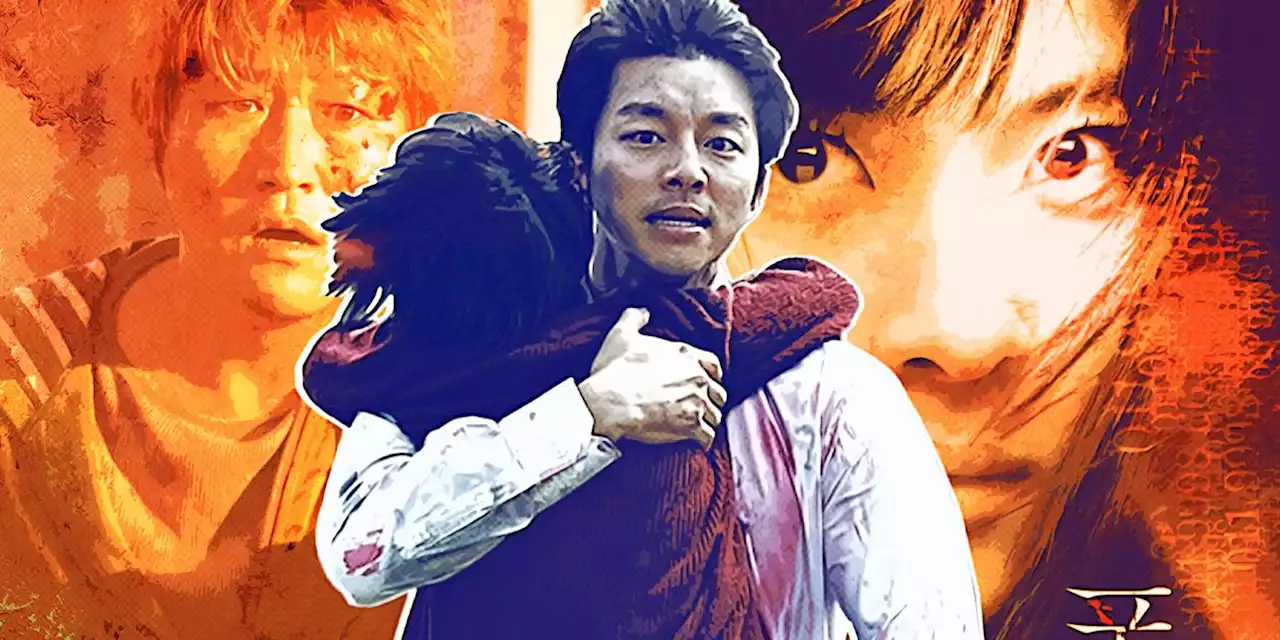 Korean Horror: Where to Start If You're New to the GenreNew to K-horror? Here's a beginner's guide to get you started.
Read more »
 How to Start Your Career in Clean EnergySo, you’re starting out your career and you’re interested in clean energy. Or maybe you’re looking to switch gears and work towards a good cause
Read more »