
On May 6, 1954, Roger Bannister became an instant legend as the first man to run the one mile faster than four minutes. His 3:59.4 that evening is often cited as one of the seminal moments in the world of sports.
On May 6, 1954, the announcer at the Oxford University cinder track in England calmly gave the placings in the one mile race, and then started to announce the winning time, beginning with the word “three.
..” The small crowd erupted in delirious excitement, the rest of the announcement went unheard, and Roger Bannister became an instant legend as the first man to run the one mile faster than four minutes. His 3:59.4 that evening is often cited as one of the seminal moments in the world of sports. It has become a symbol of human achievement on the same level as the conquest of Mount Everest the previous year .It took three men to make that historic record. Bannister and Chris Chataway, formerly Oxford students, and Chris Brasher, formerly of Cambridge University, were representing the English Amateur Athletic Association in the annual meet against Oxford, and chose that obscure opportunity for a planned attack on the elusive four-minute “barrier.”There was urgency. The world had talked of sub-four since the heady days when the “Mile of the Century” races in the 1930s enraptured huge crowds, as Americans Glenn Cunningham and Bill Bonthron, New Zealander Jack Lovelock, and England’s Sydney Wooderson progressively cut the mile and 1500 meter records to 4:06.4 and 3:47.8, respectively. During the war years, Swedes Arne Andersson and Gundar Haegg kept the sub-four passion alive, leaving the mile record at 4:01.4 by Haegg.Since 1945, that time had never been threatened. Four minutes was regarded as “the impossible barrier,” beyond human reach. But suddenly, in December 1952, the little-known John Landy reignited the flame by running 4:02.1 in the early Australian summer. The next month, Landy stayed under sub-4 pace until the final bend, ending that one on 4:02.8 and leaving the Aussie crowd beating the air in disappointment.In the northern spring of 1953, the assault began in earnest. Bannister, having missed an Olympic medal in 1952, ran 4:03.6, glimpsed his destiny. Kansas University’s Wes Santee seized the initiative with 4:02.4, Bannister hit back with 4:02.0, and the now-forgotten Sune Karlsson brought Sweden back into the race with a 4:04.4.The barrier stood. And it survived through another Australian summer, as Landy tried again and again from December 1953 to April 1954. He got down to 4:02.0. He had to do it on grass tracks and in hot, windy conditions. In his last attempt in Australia, he trod on a football stud and ran most of the race with its nails in the sole of his foot. That day, he ran 4:02.6. In the American indoor season, Santee had done exactly that as a relay leg.That same April, Santee had to run three events for Kansas against University of California at Berkeley. He ran the 880 in 1:51.5, the mile in 4:05.5, and a 440-yard relay leg in 48.0. If Santee had raced only the mile that day, would we have celebrated this 67th anniversary on April 10?But it was on May 6, 1954 that the place in history was seized by Bannister. The 25-year-old medical student was a man of detail who had sharpened his spikes on a grindstone that morning in preparation for the coarse cinders of the track; a man of planning, paced for the first two laps by Brasher and for the third lap by Chataway; and a man of suppressed passion, who released his surging sprint at exactly the right moment on the last lap to carry him through the once-impregnable barrier and into immortality. Bannister died on March 3, 2018, but his legacy in running and the world of sports will never be forgotten.
United States Latest News, United States Headlines
Similar News:You can also read news stories similar to this one that we have collected from other news sources.
 The Chicken entertained fans for the first time 50 years ago today at San Diego StadiumA San Diego State student named Ted Giannoulas dressed up in a chicken suit, bought a ticket to the Padres game and forever changed the fan experience at sporting events
Read more »
 150 Years Ago: The First Impressionist Exhibition in ParisOn April 15, 1874, the first Impressionist exhibition opened in Paris, featuring works by renowned artists such as Cézanne, Degas, Monet, Pissarro, and Renoir. Despite initial criticism, the Impressionist movement revolutionized the art world.
Read more »
 Sabrina Carpenter Gets Real About 'First Heartbreak' From 2 Years AgoIris Goldsztajn is a London-based journalist, editor and author. She is the morning editor at Marie Claire, and her work has appeared in the likes of InStyle, Cosmopolitan, Bustle and Shape. Iris writes about everything from celebrity news and relationship advice to the pitfalls of diet culture and the joys of exercise.
Read more »
 Pregnant Woman Rescued Days Ago Was Abducted 10 Years Ago as a SchoolgirlThe Nigerian Army announced the rescue of Lydia Simon, who says she was one of 276 girls kidnapped from their school in Chibok in 2014.
Read more »
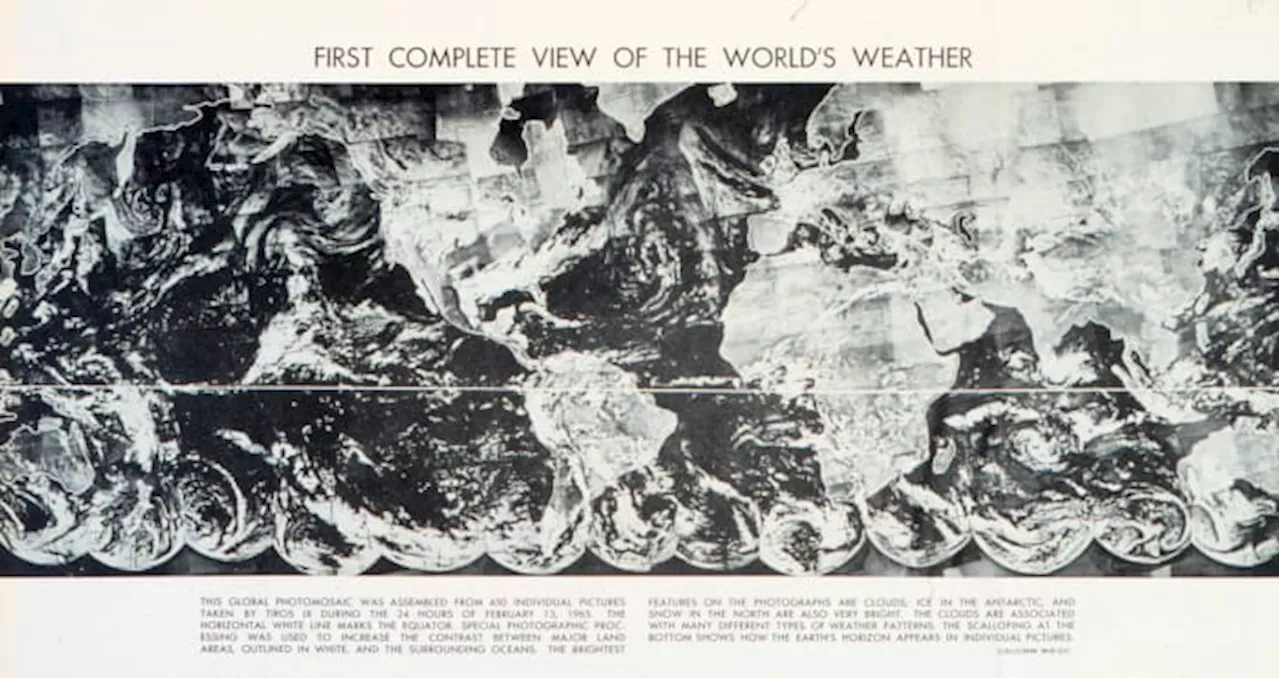 Celebrating Earth Day: The first satellite images of the earth were taken 64 years agoTIROS 1 was the first weather satellite, launched in 1960
Read more »
 This Animal Was First to Emit Light—540 Million Years AgoAnimals went bioluminescent 273 million years earlier than scientists previously thought and in a completely different species.
Read more »