


The most important stories for you to know today
El Compa Negro, performs in front of the Compton Art and History Museum. He wears a sparkly, Black velvet suit with a felt black cowboy hat known as a Tejana–a popular accessory in the regional Mexican music scene.
When many people think about Compton, they think about N.W.A and Kendrick Lamar. Compton is a historically Black city known for its vibrant African American community — an image that prevailed through the ‘90s. However, folks from Compton will tell you that a celebration of regional Mexican music on the city streets is not surprising, as Compton has gone through major demographic changes in recent decades.As the culture rubbed off on him, Rhyan Lavelle Lowery, who performs as El Compa Negro, started listening to regional Mexican music. The vast genre encompasses many styles of traditional Mexican music from. In high school, his friends formed a norteño grupo, called Los Nuevos Padrinos. They asked Compa if he wanted to be a drummer, and he said yes. One day, as they practiced “Y Tú” by Julion Alvarez over and over again —Compa remembers memorizing the words.El Compa Negro is on Facetime with his stylist, trying to pick out his outfit ahead of his set at the Compton Art and History Museum.and one of the most cherished traditions in Mexican regional music. After going back and forth a few times, he settles on a black suit — a sparkly black velvet coat, a black tejana hat and sneakers. Tucked in the corner of an unassuming strip mall, the museum could easily be overshadowed by the Popeyes that sits across from it. But tonight the museum is hard to miss, with El Compa Negro’s performance taking over the parking lot in front.“Yo Soy Compton,” an unreleased song, is El Compa Negro’s ode to his hometown. Cowboy hats bob to the music, while botas and sneakers dance along to the song in a flurry of cheers and motion. Marco Bravo, a photographer whose work was highlighted in the exhibit “Corridos from the Hood,” at the Compton Art and History Museum, dances with a partner, as El Compa Negro performs with Banda Las Angelinas.When many people think about Compton, they think about N.W.A and Kendrick Lamar. Compton is a historically Black city known for its vibrant African American community — an image that prevailed through the ‘90s. However, folks from Compton will tell you that a celebration of regional Mexican music on the city streets is not surprising, as Compton has gone through major demographic changes in recent decades. In 1996, the year El Compa Negro was born, the Latino population was around 34%. Now, Compton is around 71% Latino. But while Rhyan Lavelle Lowery, who performs as El Compa Negro, is a regional Mexican artist, the musician isn’t personally of Mexican descent. Lowery learned Spanish at the Progress Baptist Church, where he also sang in the choir and learned to play the organ. Lowery said the church played a big part in his childhood. During weekly services, the children were sent to the nursery where the late Pastor Waddell Hudson taught them the Spanish ABCs on a whiteboard. Of his siblings, Lowery said he was the one who became the most interested in learning Spanish. He grew up in a mostly Black and Mexican neighborhood — on North Pearl and Peck Avenue — where he got many opportunities to practice his Spanish. When he was a teenager, his family moved an hour away to Perris, where they owned a few acres of land. “There’s a lot of Mexicans ... they would be partying, you know the jaripeos, charreadas, like bailes, horses dancing and a banda,” El Compa Negro said, reminiscing about his teen years. Lowery said this was a difficult time in his life — his parents were in the midst of a divorce and the housing crisis put strain on the family, ultimately resulting in the loss of their house. During this time, his Mexican friends and their family became a source of comfort — they welcomed him into their culture and traditions, even gifting him a horse named Preciosa— with open arms, something he is grateful for to this day. As the culture rubbed off on him, he started listening to regional Mexican music. The vast genre encompasses many styles of traditional Mexican music from. In high school, his friends formed a norteño grupo, called Los Nuevos Padrinos. They asked Compa if he wanted to be a drummer, and he said yes. One day, as they practiced “Y Tú” by Julion Alvarez over and over again — Compa remembers memorizing the words.In the video, a teenage Lowery sings along with his friend’s guitar rendition of “Y Tu.” Lowery grows in confidence with each verse, eventually flashing a big smile at the camera and breaking out into dance as he sings the final lines. In the background, a classmate chants: “Negro, Negro, Negro, eh, eh!” Lowery said his stage name translates to “The Black friend,” or “the Black homie.” The word Negro or Negra is a commonly used in Spanish to refer to Black people across Latin America and the Latin American diaspora. These words have a complicated history — while they can be used in derogatory ways, many Afro-Latinos, Latinos of African descent, have chosen to embrace the words, like Miami artist“They’re not really separating me, they are just describing me. In Spanish, when you’re describing something, you describe it, and it becomes a part of the name,” he said. He emphasized the differences between how the word is pronounced in Spanish in English. “ The alphabet is different and has a different meaning.” While Lowery was celebrated by his friends at the beginning stages of his career, he faced a lot of pushback from the Mexican community. Anti-Blackness is prevalent in the Latino community, rooted in the history of colonization. Five hundred years ago, when enslaved Africans were forcibly taken to Mexico’s shores, Spanish colonizers created a racial caste system to control the white, Black, Indigenous and multi-racial residents. The lighter you were, the higher up you could move on the social ladder. This racialized system persists to this day. “People would tell me they were going to kill me,” Lowery said. “I just kept doing my thing. A lot of people would tell me to leave the Mexican music for the Mexicans — that I should be rapping. But I did my research. Mariachi music has a lot of elements that are derived from African music.”“This whole time that they were telling me to not sing this music, I was singing my own music,” he said. The erasure of African heritage in Latinidad, especially within Mexican history, is one of the issues that Lowery attempts to address as Black artist singing regional Mexican music. Core to his mission is standing up against racial injustice, anti-Blackness and colorism in the Latino community. He hopes that he can bring both of these families closer together through his music.on stage to sing with him at the Del Mar County Fair in San Diego. Hernandez had seen a video of Lowery covering his song “” on YouTube and the artist was impressed. That was a pivotal day for a young Lowery — he performed for a crowd of about 15,000 people. Despite the success and momentum around him, Lowery found it hard to make a living as a working musician. Traditional Mexican labels, he said, did not want to sign him because he was a “Negrito.” Around that time, Lowery learned he was going to become a father. He decided to prioritize family life and focus on fatherhood, and get a day job. For the next few years, he worked as a construction worker and tried his hand at being a car salesman. Although he picked up music gigs here and there, for the most part, he focused on providing for his family. Then, an opportunity came that he couldn’t miss: In 2022, El Compa Negro was offered a record deal from Boss City Music and Death Row Records. At 29, he’s finally being recognized.“People tell me jamás, jamás vas a poder" — you will never be able to —"but I know that I will,” he said. Lowery works evening shifts at Amazon and flips burgers at a club late into the night on the weekends. He’s a single dad and lost his mom two years ago. But Lowery said all of the hardship and pain has led El Compa Negro to creating a new, highly-anticipated, 10-track album. “I know that one day, we will be united,” he said. This album brings him one step closer to achieving his dream. The record will feature romantic banda songs, traditional corridos and his soon-to-be-released single — and the album’s title track — “Yo Soy Compton.” Aisha Wallace-Palomares is a journalism student at UC Berkeley Graduate School of Journalism’s Audio Program, where she has been covering regional Mexican music.
United States Latest News, United States Headlines
Similar News:You can also read news stories similar to this one that we have collected from other news sources.
 Claude McKay’s ‘Harlem: Negro Metropolis’ on view at Antiquarian Book FairA signed first edition of Claude McKay’s non-fiction book, “Harlem: Negro Metropolis,” will be on display and available for purchase at this year’s New York International Antiquarian Book Fair.
Read more »
 How did Jackie Robinson’s historic MLB signing affect the international game?The first wave of Texas and international players hit when the Negro Leagues were formed.
Read more »
 ‘Just wanted to play baseball’: New exhibit celebrates the men who integrated the sportIt tells the Negro Leagues’ history, introduces Black and Latino players who went on to integrate baseball and pays special tribute to Johnny Ritchey, the Padres’ first Black player.
Read more »
 Classical guitarist from Cleveland bridges past and present with Negro spiritualsDamian Goggans' performances of '14 Etudes on The Music of Black Americans' connect audiences to the rich history of African-American musical traditions.
Read more »
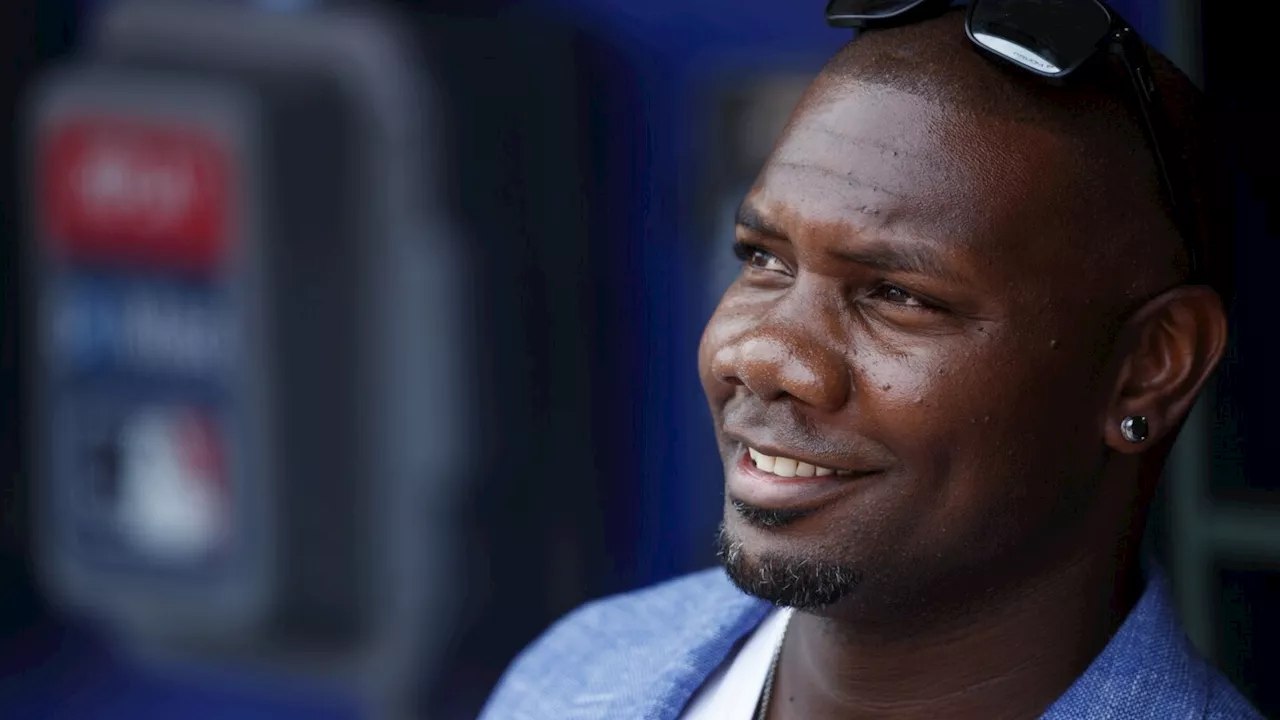 Former Phillies slugger Ryan Howard makes pitch for Negro Leagues Baseball Museum expansionFormer Philadelphia Phillies slugger Ryan Howard and San Diego Padres manager Mike Shildt announced their plans Thursday to join the Negro Leagues’ “Pitch for the Future” in bringing greater awareness to the legacy of the Negro Leagues with a museum expansion.
Read more »
 Padres note: Ha-seong Kim’s homecoming, injury updates, backing the Negro LeaguesHa-Seong Kim returns to Petco Park as a member of the Tampa Bay Rays; Padres injury updates for Jackson Merrill, Luis Arraez, Brandon Lockridge
Read more »