
Justices shot down concerns from the app and content creators that the law violates their First Amendment rights.
TikTok could be removed from U.S. app stores Sunday as the Supreme Court greenlit Friday the federal law banning the app unless it separates from ByteDance, likely shutting down the app in the U.S.—though it remains to be seen what will happen after President-elect Donald Trump is inaugurated Monday.
upholding a lower court’s ruling in favor of the federal ban on the app, meaning the law will take effect as scheduled Sunday. The Supreme Court heard oral arguments last week over the legality of the federal law, which bans TikTok unless Chinese-owned parent company ByteDance divests from the platform, as TikTok and content creators on the app opposed the law and argued it violated their First Amendment rights. The court ruled the law does not violate TikTok and its users’ First Amendment rights, noting that while the law “certainly burdens users’ expressive activity in a non-trivial way,” the policy is focused on China’s control of the platform and “do not target particular speech based upon its content” or “regulate speech based on its function or purpose.” Justices said the government’s decision to single out TikTok was justified, noting the law’s focus on “a foreign adversary’s ability to leverage its control over the platform to collect vast amounts of personal data from 170 million U.S. users,” and argued that purpose “neither references the content of speech on TikTok nor reflects disagreement with the message such speech conveys.” They upheld the government’s national security justification for banning TikTok and ruled the law was not overbroad in banning TikTok, since it is a “conditional ban” that just “prevent China from gathering data from U. S. TikTok users unless and until a qualified divestiture severs China’s control.”“There is no doubt that, for more than 170 million Americans, TikTok offers a distinctive and expansive outlet for expression, means of engagement, and source of community,” the justices wrote. “But Congress has determined that divestiture is necessary to address its well-supported national security concerns regarding TikTok’s data collection practices and relationship with a foreign adversary.”It’s still unclear what will happen Sunday when the federal law takes effect, assuming there are no major last-minute moves by TikTok to separate from ByteDance before the deadline. President Joe Biden could technically still delay the law from taking effect for 90 days if there’s evidence of a divestiture, but there’s no evidence of that so far, and Biden has not signaled any intention to pause the ban. The law specifies that companies owning U.S. app stores will face penalties if they continue to host TikTok once the ban takes effect, so Apple and Google will likely remove the app from their app stores, meaning users won’t be able to download the app or update it. The law also outlaws internet service providers from hosting TikTok, such as Oracle, which hosts the app’s U.S. user data. While it’s been up in the air what that could look like in practice—as University of Minnesota law professor Alan Rozenshtein noted toTikTok could just move those servers out of the U.S., keeping the app online—reports suggest the app will shut down entirely to U.S. users. The Information first, citing anonymous sources who say users who try to access the app will just see a popup message directing them to a website with information about the ban. Those reports echo what TikTok’s attorney Noel Francisco told the Supreme Court Friday, saying he believed if the ban takes effect, “We go dark—essentially the platform shuts down.”imposing an executive order that would at least temporarily lift the TikTok ban after it takes effect, as the president-elect’s lawyers have said he opposes the law, and reports indicate he wants to try and negotiate a solution with China and ByteDance. The law allows presidents to impose a 90-day delay on the ban taking effect if there’s sufficient evidence that ByteDance is divesting from TikTok—which so far there isn’t, meaning that while Trump could try to temporarily undo the law, any attempts to do so could be challenged in court. Trump could also direct his Justice Department not to enforce the law, though legal experts have warned that would likely not work in restoring the app. Companies affected by the ban, like Apple and Google, are likely to hedge and follow the ban, given the possibility they could face legal liabilities if Trump were to change his mind. It’s also unclear whether China—which will have to approve any sale of ByteDance—will be willing to negotiate with Trump, and The Washington PostByteDance and TikTok have so far resisted any suggestion that ByteDance could divest and sell TikTok’s U.S. assets, with TikTok saying in a court filing that doing so would not be possible “technologically, commercially, or legally.” Now that the ban has been upheld it’s unclear if that will remain the case, however, and Solicitor General Elizabeth Prelogar noted to the Supreme Court Friday the government thinks banning the app could be the “jolt” TikTok and ByteDance need to actually start separating. Reports have emerged of potential buyers in recent days as the ban has appeared poised to take effect: Billionaire Frank McCourthis group Project Liberty has made a formal offer to ByteDance for TikTok’s U.S. assets, and “Shark Tank” star Kevin O’Leary has alsohe was involved in the deal. China would have to approve any sale ByteDance makes, and James Lewis, director of the Strategic Technologies Program at the Center for Strategic and International Studies, toldChina could be persuaded to approve of the sale in exchange for Trump backing off his threat of high tariffs on Chinese imports.Another possibility that’s emerged in recent days is that billionaire Elon Musk could step in to keep TikTok afloat, even as the Tesla CEO’s ownership of Twitter—now renamed X—has drawn controversy. MultipleChinese officials have held private conversations about the possibility of selling TikTok’s U.S. assets to Musk, who has expressed favorable views about China and its leadership and frequently does business in the country. It remains to be seen whether that will actually happen, and TikTok has so farthe reports as “pure fiction.” Musk hasn’t yet commented on whether he would be interested in acquiring the app.in a note Tuesday that ByteDance would likely look to sell TikTok’s U.S. assets for somewhere between $40 billion and $50 billion. While that’s in line with Musk’s $44 billion takeover of Twitter in 2022, it’s far above what McCourt’s Project Liberty has offered. The consortiumin December its offer to ByteDance has $20 billion in commitments from investors, though that amount could now be higher.32%. That’s the share of U.S. adults who support the federal government banning TikTok, according to a Pew Researchconducted in July and August, while 28% oppose it and 39% are unsure. Support for a TikTok ban has steadily declined, as Pew notes the 32% now backing a TikTok ban is down from 50% who supported it in March 2023 and 38% in fall 2023.The law targeting TikTok was enacted in April following longstanding concerns about the app and its ties to China from lawmakers on both sides of the aisle. TikTok has long denied any links to the Chinese government or any wrongdoing, though Forbes has reported on numerous concerns regarding the app, including TikTok. While the law has been enacted for months, the ban became closer to reality in December, when a federal appeals courtbrought by TikTok and content creators on the app, upholding the federal law. The panel of appeals judges ruled the government’s national security concerns justified the ban and the law did not infringe on TikTok and its users’ First Amendment rights, as all content on the app would still be available if the company just separated from ByteDance. TikTok then went to the Supreme Court after the appeals court also ruled against temporarily pausing the law from taking effect, and justices took up the case quickly after, scheduling the case for oral arguments on a timeline that would allow the court to rule before the law could take effect.TikTok users fearing an impending ban on the app have started flocking to the app “Red Note” in recent days, catapulting the app to the top of Apple’s app store as it’s become a primary alternative to TikTok. The switch to the app runs contrary to the federal government’s fears about Chinese influence on TikTok, as Red Note is a Chinese-owned app, and The New York Timesusers are gravitating toward the app as a signal to lawmakers that they do not share the government’s concerns about Chinese influence.Can Trump Stop TikTok Ban? Here’s What He Can—And Can’t—Do As Supreme Court Signals It Could Support LawOur community is about connecting people through open and thoughtful conversations. We want our readers to share their views and exchange ideas and facts in a safe space.Insults, profanity, incoherent, obscene or inflammatory language or threats of any kindContinuous attempts to re-post comments that have been previously moderated/rejectedAttempts or tactics that put the site security at riskProtect your community.
Supreme Court Ruling Opinion Will Supreme Court Ban Tiktok Will Tiktok Ban Take Effect January 19 Donald Trump Bytedance Will Bytedance Sell Tiktok
United States Latest News, United States Headlines
Similar News:You can also read news stories similar to this one that we have collected from other news sources.
 Supreme Court to Hear Arguments on TikTok Ban LawThe Supreme Court has agreed to hear arguments next month regarding the constitutionality of a federal law that could force TikTok to be sold or banned in the US if its Chinese parent company doesn't comply. The justices will consider whether the law violates the First Amendment by restricting speech.
Read more »
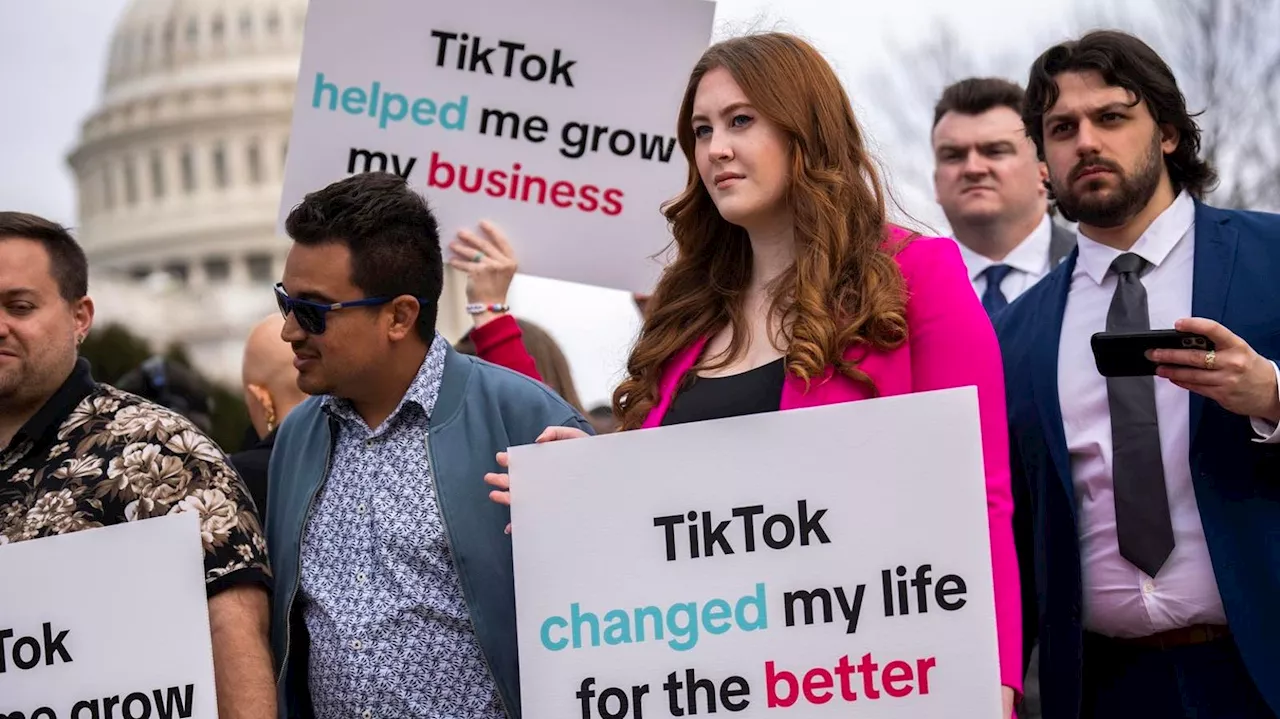 Supreme Court to Hear TikTok Ban Challenge, Ruling Expected Before January 19The Supreme Court will decide whether TikTok can remain in the U.S. or must separate from its parent company, ByteDance, to comply with a federal law banning the app. Oral arguments are scheduled for January 10, days before the ban is set to take effect. The court will consider if the law violates the First Amendment rights of TikTok and its users.
Read more »
 Supreme Court to Hear TikTok's Challenge to Ban LawThe Supreme Court agreed to hear arguments by TikTok that a law that could lead to a ban of the popular social media app should be blocked pending the company's appeal of a lower-court ruling upholding the law.
Read more »
 Supreme Court to Hear Arguments on TikTok BanThe Supreme Court will hear arguments on January 10th regarding TikTok's attempt to block a federal ban if the platform isn't sold by January 19th. This follows a lower court's rejection of TikTok's request for a temporary ban pause. TikTok, with over 170 million U.S. users, is challenging the sale-or-ban law on First Amendment grounds, arguing that a ban would infringe on users' free expression rights. While the D.C. Court of Appeals found merit in security concerns about potential data collection or content manipulation by the Chinese government, TikTok maintains that the ban violates free speech.
Read more »
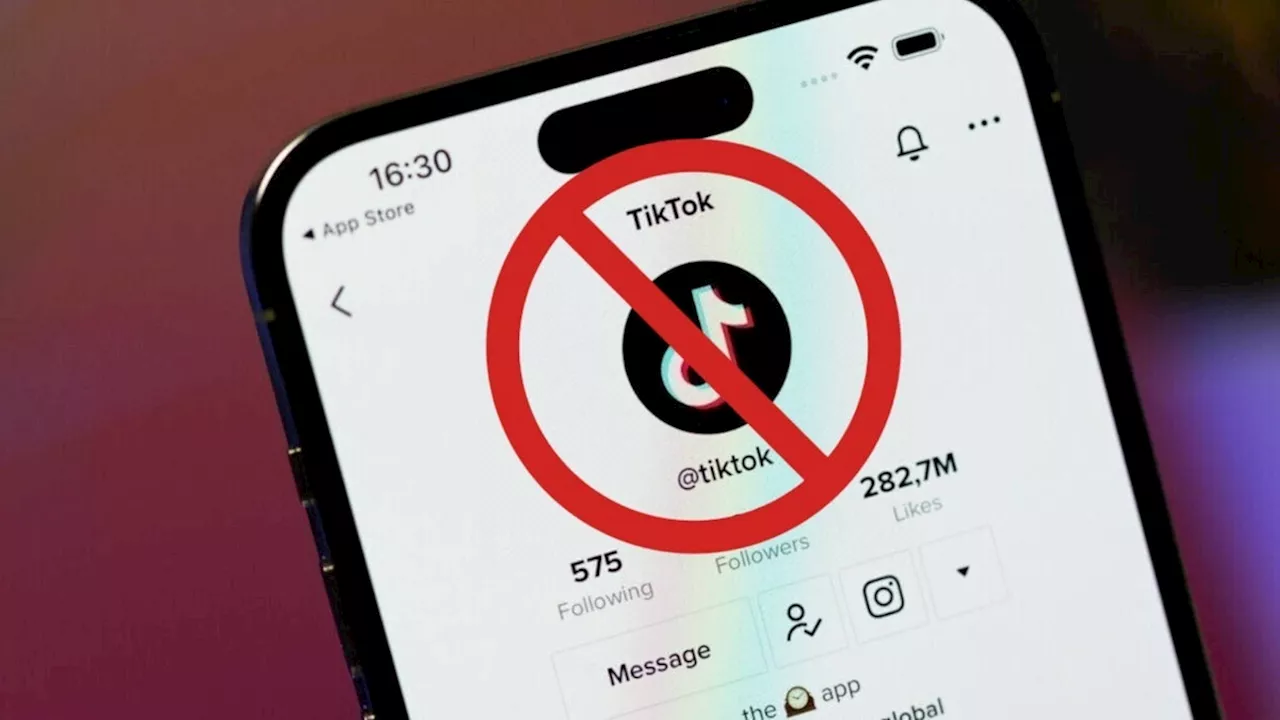 TikTok Ban Looms as Supreme Court Hears CaseThe Supreme Court heard arguments today in the case of TikTok's potential ban in the U.S. The Biden Administration has demanded ByteDance, TikTok's parent company, sell the app or face a ban by January 19th. TikTok argues there is no evidence to support claims it poses a national security threat or sends propaganda. Despite previous attempts by the Trump Administration to ban the app, President Trump now supports TikTok, potentially as a strategy to win the youth vote. The Supreme Court's decision could have major implications for the future of TikTok in America.
Read more »
 Major School Bus Crash in Cypress and TikTok Ban Upheld by Supreme CourtA major collision involving a school bus and an SUV in Cypress, Texas, has resulted in significant delays. Meanwhile, the Supreme Court has upheld a law banning TikTok downloads and updates in the U.S., citing national security concerns. This decision has sparked debate about the app's future and its potential impact on users.
Read more »